Charlotte is the largest city in the Carolinas, a banking center with a major airport, pro sports and a year-round event calendar, so demand here is steadier and flatter than in the mountains. The money is made on occupancy and on the few weekends that spike, not on a single season.
What a Charlotte vacation rental earns
Over the last twelve months, the typical (median) entire-home rental in Charlotte earned the amounts below, including the cleaning fees guests pay. These are what listings actually earned, not what they asked. A dash means fewer than five comparable listings.
| Market | 2 BR | 3 BR | 4 BR | 5 BR | 6 BR |
|---|---|---|---|---|---|
| Charlotte | $19,200 | $22,500 | $26,600 | $44,000 | $44,800 |
The most common size here is 3 bedrooms (1421 listings in the data). For that size the bottom quarter of listings earned $10,300 or less, the median earned $22,500, and the top 10% cleared $47,100. The spread is the point: the house is only part of the number, and the rest is pricing, photos and how the calendar is run. Average occupancy across Charlotte listings was 55%.
Seasonality: July and June are the two strongest months in Charlotte; February and January are the softest. A home here should be priced for the peaks months ahead and discounted carefully, not reflexively, in the gaps.
These figures come from Host Carolina's market data system and are the same medians shown on the revenue check. For your own home, amenities, finish and capacity move the number well above or below the median; run your address to see your range.
Rules and taxes in Charlotte
As of the last public reporting, Charlotte's proposed short-term rental rules (a zoning permit and 400-foot spacing) were dropped from the Unified Development Ordinance draft until state law settles. We have not confirmed the current status on a city source, so we check it for every Charlotte address before listing.
Under state law (G.S. 160D-1207(c), as applied in Schroeder v. Wilmington, 2022), a North Carolina town cannot require short-term rental registration, or a permit that works as one. Towns can still use zoning districts and operating standards.
Mecklenburg County's combined sales tax rose from 7.25% to 8.25% on July 1, 2026, and it applies to stays under 90 days, including the cleaning and booking fees a guest pays.
Mecklenburg County's occupancy tax is about 8% (6% plus 2%), the only county rate in North Carolina above 6%. Confirm with the county; the rate comes from a July 2026 trade-association profile.
Whoever collects the guest's payment is the party that remits both the sales tax and the occupancy tax. A local manager that collects rent is liable for it even when the home is also listed online, and an owner who collects directly is liable for it themselves. When Host Carolina manages your home, we handle the filings and show the tax on your statement.
None of this is legal or tax advice. Rates and rules change; the sources are listed at the bottom of this page, and we confirm the current rules for your address before anything is listed.
How Host Carolina runs homes in Charlotte
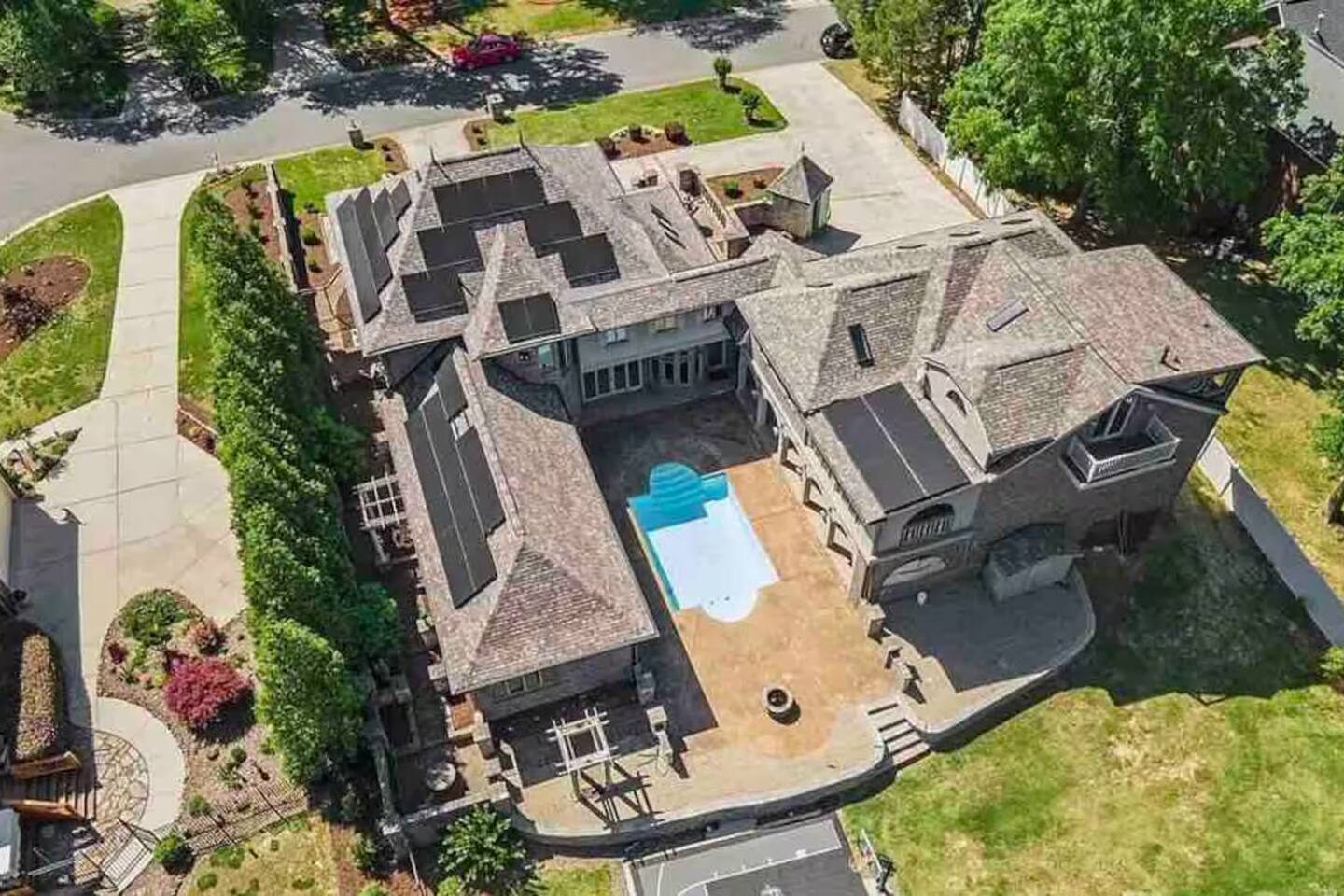
Our own homes in the Charlotte area include Castle CLT in Harrisburg, one of the top revenue producers in its market. Yours gets the same pricing review and the same crews.
- Pricing reviewed every day by an owner of the company, using dynamic pricing plus our own market data. It is the same review that keeps our homes 30% or more ahead of their comps.
- Local crews. Cleaning and repairs are done by our own crews in the High Country and around Charlotte, so a repair happens this week, not when a contractor feels like making the drive.
- One fee: 25% of booking revenue (the nightly rate plus extra-guest and pet fees). Repairs are invoiced separately and itemized on your statement. You approve anything over $500; an emergency, or anything that would mean refunding a guest, is fixed first up to $1,000 and you hear about it right away.
- Plain terms. A 12-month agreement, 60 days' written notice to end it from either side, your family weeks set in writing before the calendar opens, guest damage protection up to $1,500, and owners paid around check-in on one clear monthly statement.
- We walk the house for you. Most of our owners live out of state. We go, send photos and a short list of anything the house needs, and you approve every cost before guests arrive.
- Airbnb and Vrbo. Your listings run on both, synced, with every guest message answered seven days a week.
Prefer to stay the host and hand off only pricing and systems? Co-hosting is 10% of booking revenue plus $175 a month. Fees and terms in full are on the home page.
Questions Charlotte owners ask
How much does a vacation rental make in Charlotte?
Over the last twelve months the median Charlotte vacation rental earned about $19,200 with 2 bedrooms, $22,500 with 3 bedrooms, $26,600 with 4 bedrooms, $44,000 with 5 bedrooms, $44,800 with 6 bedrooms, including guest-paid cleaning fees. For a 3-bedroom home, the most common size here, the top 10% cleared $47,100. Your own home's range depends on amenities, finish and capacity; the revenue check gives it in about a minute.
What is Host Carolina's management fee?
25% of booking revenue, taken from the nightly rate and the guest fees for extra guests and pets. Repairs are invoiced separately and itemized. Co-hosting is 10% of booking revenue plus $175 a month for software and systems.
Do I need to live near Charlotte?
No. Most of our owners live out of state. We walk the house for you, send photos and a short list of anything it needs, and you approve every cost before guests arrive.
Who files the occupancy tax?
Whoever collects the guest's payment remits the sales and occupancy tax. When Host Carolina manages your home we handle the filings and show the tax on your statement. If you collect rent yourself, you are the one liable for it.
Can I still use my home?
Yes. Your family weeks are set in writing before we open the calendar to guests. The trade-off is simple: every blocked peak week is revenue the house does not earn that year, so most owners block the weeks they will really use and leave the rest open.
How fast can I switch managers in Charlotte?
Give your current manager whatever notice your agreement requires, and we can be ready to take over at the end of it. Under North Carolina's Vacation Rental Act, advance rent on bookings already taken must be transferred to the new manager within 30 days of the change, so bookings on your calendar stay put.
See where your Charlotte home sits
Put in your address and you will see your market range in about a minute, no phone number needed. Or call or text (828) 478-8024 and an owner of the company answers.
Bookings already on your calendar stay put when you switch; here is how the handoff works. Fees and terms are on the home page.
Sources
- WCNC, Charlotte short-term rental regulations pause (news report, not a city source) — https://www.wcnc.com/article/travel/charlotte-short-term-rental-regulations-pause/275-8d25fddd-5ff1-4f38-b3cd-93cf3ad00da6
- UNC School of Government, Short-Term Rental Regulations after Schroeder — https://canons.sog.unc.edu/2022/04/short-term-rental-regulations-after-schroeder/
- NC Department of Revenue, Important Notice: Mecklenburg County sales and use tax increase — https://www.ncdor.gov/taxes-forms/sales-and-use-tax/other-sales-and-use-tax-resources/important-notices-issued-sales-and-use-tax-division/important-notice-mecklenburg-county-sales-and-use-tax-increase
- NC Department of Revenue, Rentals of Accommodations — https://www.ncdor.gov/taxes-forms/sales-and-use-tax/rentals-accommodations
- NC Restaurant and Lodging Association, North Carolina Occupancy Taxes (July 2026 profile; trade association, not a government source) — https://www.ncrla.org/wp-content/uploads/2026/08/2026-North-Carolina-Occupancy-Taxes-July-2026_opt.pdf
- UNC School of Government, Occupancy Taxes and Airbnb — https://canons.sog.unc.edu/occupancy-taxes-and-airbnb/